Brian Jean stoking resentment of Alberta in other provinces for his own political gain
July 16, 2017 | Markham on Energy
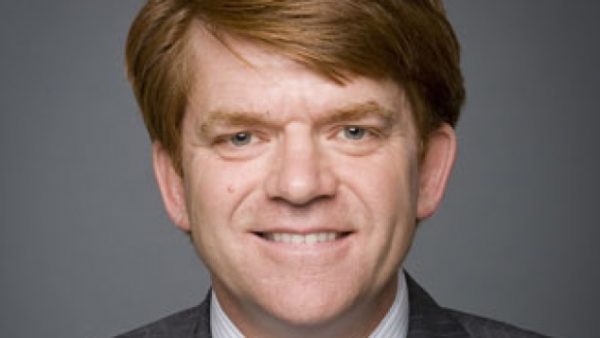
Brian Jean, leader, Wildrose Party of Alberta.
Jean deceives Albertans by distorting province’s contribution, role in equalization program
“Hostility is not a good political strategy,” is how Calgary communications expert Doug Lacombe described an oil and gas industry attempt in 2015 to tie equalization payments to pipeline approvals. Someone needs to tell Wildrose leader Brian Jean – who is busy making the same argument today – that nothing has changed in three years.
 Frankly, Jean is a political klutz on the national scene.
I warned 18 months ago that Jean’s “shrill demands” for Ottawa to approve the Trans Mountain Expansion, Northern Gateway, and Line 3 pipelines were alienating support in other provinces where Alberta needs to get pipelines built.
Two of those pipelines were approved Nov. 29 by Prime Minister Justin Trudeau and in just a few months Kinder Morgan will be firing up the bulldozers to begin construction in the face of vehement opposition from eco-activists, First Nations, and Metro Vancouver mayors. Not to mention plenty of ordinary citizens concernend about the environmental effect of dilbit spills.
Now is the time for diplomacy and engagement.
What is Jean doing? Conducting an angry and highly visible campaign to reduce equalisation payments because “Albertan’s [sic] continue to shell out billions in transfer payments while it faces opposition from its provincial neighbours on projects of national interest.” And by projects Jean means pipelines.

Prime Minister Justin Trudeau, centre. Photo: CBC.
He even demanded to meet with Trudeau during the Calgary Stampede, a request the Prime Minister rightly denied because Jean and his party are not Alberta’s official representatives.
Jean is Notley’s problem, not Trudeau’s.
There are four problems with Jean’s demands.
One, Canada isn’t North Korea or a South American banana republic. British Columbians who disagree with a pipeline carrying dilbit through their back yard are allowed to oppose the project. They’re even allowed to protest, write angry letters to the editor, contribute money to anti-pipeline eco-activist groups, or express their displeasure in the many ways afforded them in a free and open democracy.
The Trudeau Government has affirmed those rights, but warned that pipeline protesters breaking the law will be arrested by the police – perhaps even the military – and prosecuted.
Jean has to explain why he thinks BC pipeline opposition should be silenced. And why he thinks withholding federal money to silence that opposition is ok.
The principle is odious.
Two, British Columbia opposition is irrelevant. Inter-provincial pipeline approval and regulation is the exclusive jurisdiction of the Canadian government. Trudeau granted approval. End of story.
The rest is just noisy political theatre.
Jean has to explain why he continues to tie pipelines to equalization when Alberta has already received the outcome it wanted.
Three, Jean knows how the federal transfer payment systems works because he was a Parliamentary secretary in the Conservative government of Stephen Harper and voted for the last change to the program.
Jean has to explain why he was fine with the level of transfer payments to have-not provinces then but isn’t now.
Four, fatuous demands like Jean’s let Alberta off the hook for the hard work it should be doing – talking to British Columbians about why the Kinder Morgan pipeline deserves their support, or at least not their outright opposition.
Alberta has a problem: none of its politicians or energy industry leaders will fight for pipelines and the oil sands. Whoa, you say, that doesn’t sound right. And I respond, don’t confuse whining with fighting.
Here’s what Vancouver pipeline fighters do.
They organize: emailed calls to action, fundraising, social media campaigns, petitions – it’s a long list.
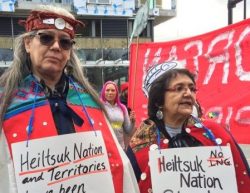
Photo: CBC.
Protests like the 4,000 strong that marched the streets of Vancouver after Prime Minister Justin Trudeau approved the Trans Mountain Expansion and Line 3 pipelines last Nov.
Law suits launched by First Nations and environmental groups.
Continual press releases, dubious “studies” claiming to destroy the economic case for Trans Mountain Expansion, media comment at the drop of a hat (compared to Kinder Morgan, which avoids commenting for news stories unless it can’t avoid doing so), and biased media stories that don’t
Now, what do Albertans do in British Columbia to counter this Tsunami of opposition?
*crickets* That’s how Albertans respond.
When was the last time Brian Jean flew west of the Rockies to plead Alberta’s case? To the best of my knowledge, the answer is, never.
But Jean isn’t alone.
The Alberta energy industry has done a terrible job in BC.
From Enbridge’s ham-handed First Nations “consultations” and advertising campaigns that always seemed to go off the rails to the almost complete absence in the public consciousness of trade groups like the Canadian Assoc. of Petroleum Producers and the Canadian Energy Pipelines Assoc., industry’s effort to win political legitimacy on the West Coast have been pathetic.
If industry had done a better job, especially building bridges with its natural ally, the BC business community, would Lotus Land be the anti-pipeline powder keg it is today?
Arguably, no.
And let’s add the Alberta government to the list of culpable parties. Premier Rachel Notley and her responsible ministers – Shannon Phillips in environment and climate change, Marg McCuaig-Boyd in energy – neglected pipeline politics in British Columbia far too long.
Notley’s NDP government implemented the most progressive energy and climate policies in North America, then failed to use the Climate Leadership Plan to build Alberta’s public case for Trans Mountain Expansion.
The Premier says she will travel to BC this fall to lobby for the project, but she doesn’t have enough fingers and toes – or time – to plug all the holes that have sprung in the proverbial dyke.
The Trans Mountain Expansion tragedy is going to play itself out in Vancouver and Burnaby over the next year and the odds are better than even it will become a political conflagration the likes of which we haven’t seen since the violent War of the Woods in the early 1990s.
Brian Jean can rest content knowing that he has done his part to throw gasoline on the fire.
Correction: Brian Jean was appointed Parliamentary Secretary to Minister of Transport, Infrastructure and Communities Lawrence Cannon in Feb. 2006, but was not a cabinet minister in the Stephen Harper government, as this column states.

Follow Teo on LinkedIn and Facebook.