
This article was published by the US Energy Information Administration on March 12, 2025.
By EIA staff
In the United States, cumulative utility-scale battery storage capacity exceeded 26 gigawatts (GW) in 2024, according to our January 2025 Preliminary Monthly Electric Generator Inventory. Generators added 10.4 GW of new battery storage capacity in 2024, the second-largest generating capacity addition after solar. Even though battery storage capacity is growing fast, in 2024 it was only 2 per cent of the 1,230 GW of utility-scale electricity generating capacity in the United States.
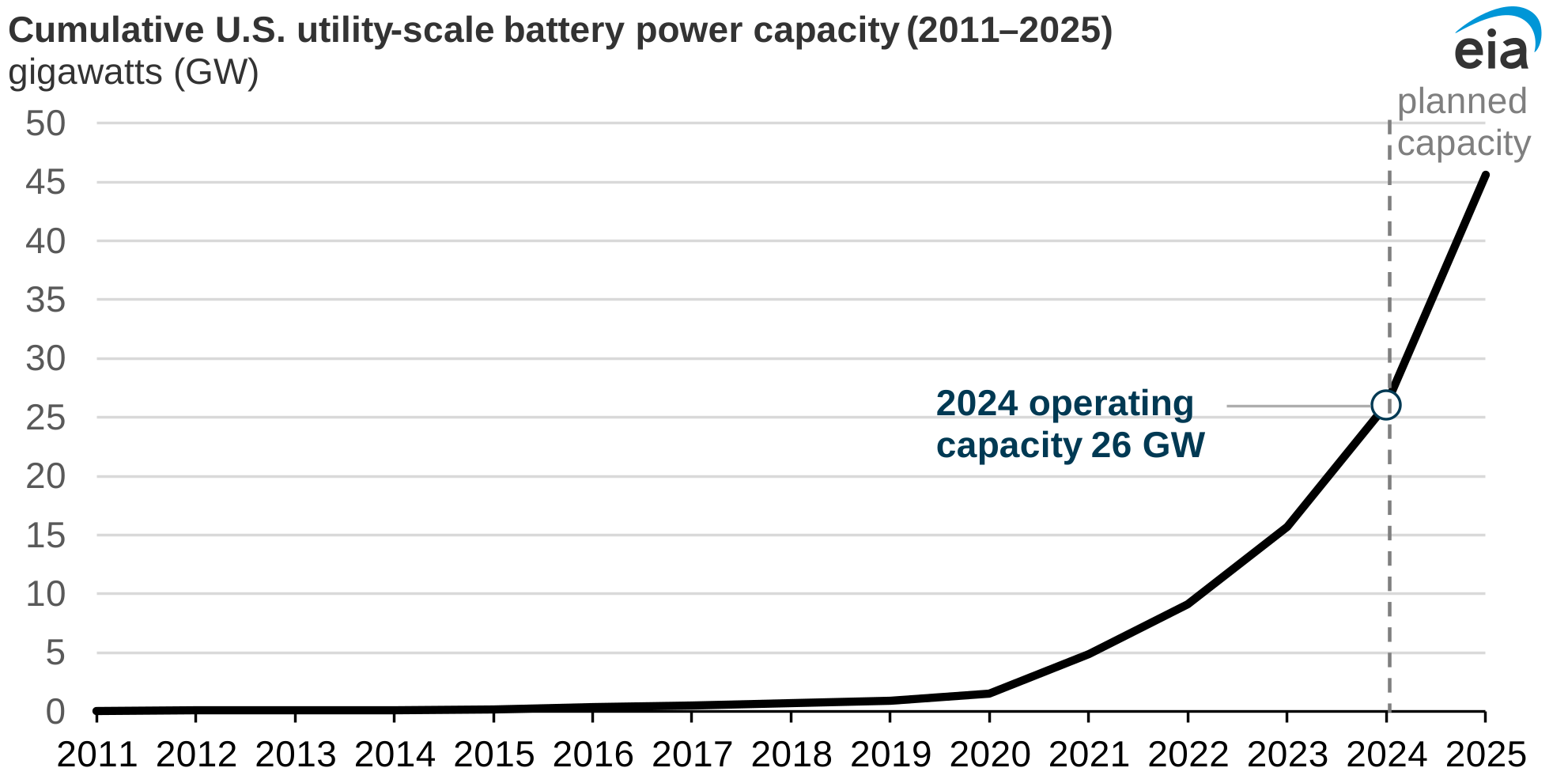
In 2025, capacity growth from battery storage could set a record as operators report plans to add 19.6 GW of utility-scale battery storage to the grid, according to our January 2025 preliminary electric generator inventory data.
Battery storage systems are not a primary electricity source, meaning the technology does not create electricity from a fuel or natural resource. Instead, batteries store electricity that has already been created from an electricity generator or the electric power grid, which makes energy storage systems secondary sources of electricity.
More detailed information about how batteries and these other systems work is available on our Energy Explained page about energy storage for electricity generation.

Be the first to comment