Churchill Falls Deal Is a Breakthrough, But Major Questions Remain
August 18, 2026 | News
The new Churchill Falls agreement between Quebec and Newfoundland and Labrador is a major political breakthrough, but the hydroelectric projects attached to it remain a long way from final approval, according to York University professor Mark Winfield.
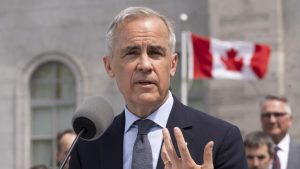
Canadian Prime Minister Mark Carney.
Prime Minister Mark Carney joined the premiers of Quebec and Newfoundland and Labrador this week to announce an agreement that could lead to upgrades and expansion at Churchill Falls, the 2,700 MW Gull Island hydro project, new wind generation in Labrador and hundreds of kilometres of new transmission infrastructure.
Winfield told Energi Media that resolving the longstanding dispute over the 1969 Churchill Falls power contract is significant in its own right. Newfoundland and Labrador has for decades argued that the agreement allowed Quebec to buy Labrador electricity at extremely low prices while capturing much of the value from subsequent sales.
But Winfield cautioned that the new arrangement remains closer to a memorandum of understanding than a final project agreement.
“There are several stages to go here,” he said, pointing to unresolved questions about technical feasibility, financing and the ultimate cost of the electricity.
The experience of Muskrat Falls in Labrador and Site C in British Columbia provides an important warning. Both large hydro projects faced major cost and construction challenges, raising questions about how governments assess the economics of megaprojects before committing public money.

Professor Mark Winfield, York University.
Winfield said the proposed power prices associated with the new agreement will need much closer examination as engineering and financing details emerge. Ottawa has offered up to $10 billion in support, and the eventual federal commitment could grow depending on how the projects develop.
Indigenous rights are another unresolved issue. Winfield said the limited Indigenous presence around the announcement was striking, particularly for new-build projects such as Gull Island. The affected Indigenous communities will need meaningful consultation as projects move from political agreements into planning and approvals.
The agreement could also have consequences far beyond Labrador and Quebec. Greater hydroelectric generation and storage, combined with expanded transmission, could provide balancing power for wind and solar across Eastern Canada.
Winfield said that possibility should cause Ontario, New Brunswick and Nova Scotia to reconsider electricity pathways that currently rely heavily on new nuclear development or fossil-fuel generation. Greater access to Quebec and Labrador hydro could offer lower-emission and potentially lower-cost alternatives while improving energy security.
Whether that happens remains uncertain. Much of the new electricity discussed so far appears destined for potential mining developments in Labrador or exports through Quebec into New England and New York.
Winfield said a stronger national strategy would use expanded clean electricity to support electrification within Canada as well, including replacing fossil fuels in transportation, buildings and industry.
Even with those caveats, he described the interprovincial breakthrough as important. Canadian electricity systems have historically been oriented north-south toward U.S. markets and separated by provincial boundaries. Resolving the country’s biggest electricity dispute could make it easier for other provinces to negotiate new east-west connections.
The agreement therefore creates an opportunity that extends beyond Churchill Falls. The political barrier has started to move. The harder work now is proving the projects and deciding what kind of Canadian electricity system they are meant to build.