BC Hydro’s Island Generation Purchase Raises Questions About British Columbia’s Electrification Ambitions
August 5, 2026 | News
BC’s recent strategy was a big step backward, more about protecting the status quo than preparing for the Age of Electricity
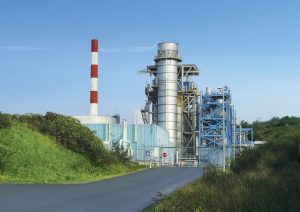
Credit: Capital Power.
BC Hydro’s decision to purchase the Island Generation natural gas power plant in Campbell River may solve a reliability problem on Vancouver Island. But it also raises a larger question about whether British Columbia is building the electricity system it will need to electrify its economy.
The Crown utility announced this week it will acquire the 275-megawatt combined-cycle natural gas facility from Capital Power. The plant has long served as a dispatchable backup resource for Vancouver Island, where electricity demand is met by a combination of local generation and high-voltage transmission cables from the Lower Mainland.
BC Hydro has argued for years that the facility provides an important insurance policy rather than a source of routine electricity generation.
Following damage to two 500-kilovolt submarine transmission circuits in 2021, BC Hydro signed a 4.5-year electricity purchase agreement with Capital Power to keep the plant available while repairs were completed. At the time, the utility said the plant was needed because there was no comparable alternative capable of providing 275 MW of dispatchable backup if one transmission circuit failed while another was out of service for repairs.
The utility also emphasized that it did not view Island Generation as part of its long-term resource plan. Its 2021 Integrated Resource Plan concluded the province could meet long-term reliability requirements without renewing the facility beyond the temporary agreement, describing the contract as a short-term response to a specific operational risk.
The acquisition appears to change that conversation.
While BC Hydro says the purchase will continue supporting reliability on Vancouver Island, ownership of the facility suggests the plant could remain part of the provincial electricity system well beyond the original temporary arrangement.
That development comes only weeks after the provincial government released its new electricity strategy, Powering Growth, Fueling Opportunity, promising to support economic growth, electrification, and clean energy development.
Critics argued the strategy lacked ambition.
“We need to invest in the future, and the future is going to be based on electricity… We need to be innovators in this space, UBC professor Werner Antweiler told Energi Media in an interview. “We’re treading water. We’re not really making significant progress… We definitely need more capacity. We need more transmission capacity as well. We need a lot more wind. We need a lot more solar. We need to remove the obstacles to deploying them.”
The plan projects electricity demand growing at an average annual rate of roughly 1.4 per cent while targeting approximately a 50 per cent increase in generation by 2050. Yet the province simultaneously hopes to expand liquefied natural gas exports, develop critical minerals, attract energy-intensive data centres and accelerate electrification across transportation, buildings and industry.
Those objectives may prove difficult to reconcile.
British Columbia already operates one of North America’s cleanest electricity grids. But electricity currently supplies only about 17 per cent of the province’s total energy consumption. The remaining 83 per cent continues to come primarily from fossil fuels.
Producing vastly more electricity to electrify existing demand while it grows over the next 25 years will be an enormous challenge, according to Antweiler.
Many analysts argue advanced economies are entering a period of rapid electrification as electric vehicles, heat pumps, industrial electrification and artificial intelligence-driven data centres push electricity demand substantially higher. Jurisdictions including China and several European countries are investing accordingly.
The purchase of Island Generation highlights the tension.
On one hand, maintaining reliable electricity service on Vancouver Island is a practical operational necessity. On the other, keeping an aging natural gas plant in service may also reflect a deeper reality: British Columbia’s electricity system remains constrained at precisely the moment the province says it intends to electrify much more of its economy.
The immediate issue may be reliability.
The larger issue is whether BC is building enough new generation to compete in an increasingly electrified global economy.