
This article was published by The Energy Mix on Jan. 12, 2026.
It took Donald Trump less than a week after his bombing raid in Venezuela to raise the ire of one major group of fossil industry donors, while threatening to freeze his country’s biggest publicly-traded oil company out of the production boom he thinks he can set in motion.
In the 10 days since the raid, Trump has claimed that Venezuela “will be turning over” 30 to 50 million barrels of oil to the U.S., that he will personally control the revenue from selling that oil, and that the U.S. fossil industry will pile in to Venezuela to restore its decrepit, poorly-maintained production infrastructure.
But that isn’t sitting well with fracking executives in Texas—many of whom “bankrolled the president’s return to office”—who expect any increase in production to push global oil prices below the threshold where they can continue to operate, the Financial Times reports.
“Problems in Texas’s oil industry are mounting, as cheaper oil forces producers to idle rigs needed to keep production ticking higher,” the Times explains. So “Trump’s drive to open up Venezuela’s oil riches, potentially subsidizing investors, has further strained relations with oil executives in Texas, who have been angered by his dogged pursuit of ever-lower crude prices.”
In the 2024 general election in the U.S., the fossil fuel industry spent $219 million to elect the country’s next government, Yale Climate Connections reported afterwards, most of it on Republican campaigns. That was after Trump invited about 20 oil and gas executives to his Mar-a-Lago estate in April to present what one independent journalist called a “breathtakingly corrupt proposal: If they raised a billion dollars to help him retake the White House, he would roll back any policy they didn’t like when he took office.”
Now some of those donors sound like they’re questioning the return on their investment.
“We’re talking about this administration screwing us over again,” one exec told the Times. “If the U.S. government starts providing guarantees to oil companies to produce or grow oil production in Venezuela I’m going to be… pissed.”
Some industry sources are angrily calling it a “betrayal” after Trump “flew to Texas multiple times in 2024 to tap deep-pocketed oil barons for cash,” the news story adds. Their problem is that “only the biggest [fossil] energy groups, such as ExxonMobil, Chevron, and ConocoPhillips, have access to the tens of billions of dollars in capital, teams of lawyers, and security protection needed for a foray into Venezuelan oil. For smaller U.S. operators, a revitalized Venezuelan industry—if Trump can pull it off—means worsening the market glut,” with prices already below the US$60 per barrel that shale producers need to turn a profit.
“To me, the signal from the administration is: we’d rather spend our American money on propping up a Venezuelan oil business than supporting our current independent businesses,” said Trump donor Kirk Edwards, CEO of Odessa, Texas-based Latigo Petroleum.
“I think it’s an appropriate reaction by U.S. shale to be miffed,” added Pickering Energy Partners founder Dan Pickering. “Not just because Venezuelan production might go up but because the U.S. government, in theory, is going to subsidize that.”
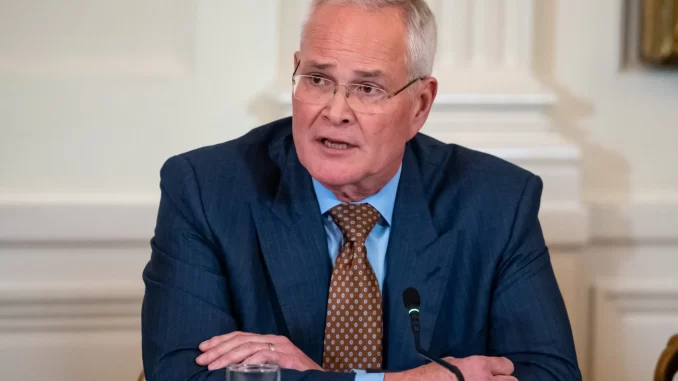
On the surface, colossal fossil ExxonMobil may be miffed, as well, after Trump took umbrage at CEO Darren Woods’ assessment that his production plan would be “uninvestable”. After meeting with fossil CEOs Friday, Trump said Woods’ bad attitude might disqualify the company from any new business in Venezuela.
“I didn’t like Exxon’s response,” he told reporters. “I’d probably be inclined to keep Exxon out. I didn’t like their response. They’re playing too cute.”
Woods maintained that Venezuela would have to make “significant changes” before Exxon would consider investing there. “We’ve had our assets seized there twice, and so you can imagine to re-enter a third time would require some pretty significant changes from what we’ve historically seen here and what is currently the state,” he said. “If we look at the legal and commercial constructs, frameworks in place today in Venezuela, today it’s uninvestable.”
He also told Trump he was “confident” those changes “can be put in place,” the Times writes.
But Venezuela’s oilfields may not be the prize Exxon is after—or even the main motivation behind Trump’s takeover. Drilled Executive Editor Amy Westervelt recaps Exxon’s extensive investments in neighbouring Guyana and recalls Venezuela’s escalating threats against those operations before the U.S. removed President Nicolás Maduro from office.
Most of the other oil execs who met at the White House Friday “delivered optimistic messages to Trump about the prospect of reviving Venezuela’s oil sector,” the Times says. But at least one U.S. news site is reporting that industry insiders “are mocking the president behind his back, predicting companies will string him along to get on his ‘good side’ and never follow through” on their promises to invest.
“The big oil companies who move slowly, who have corporate boards are not interested,” U.S. Treasury Secretary Scott Bessent told Politico, in a sequence republished by RawStory. “I can tell you that independent oil companies and individuals, wildcatters, [our] phones are ringing off the hook. They want to get to Venezuela yesterday.”
But that only shows that “the most enthusiastic are among the least prepared and least sophisticated,” said one industry official. “Anyone with a degree of international sophistication is taking a more measured approach.”
Be the first to comment