New Book by Bob Rae: “Reclaiming Canadian Sovereignty in a Ruptured World”
October 5, 2026 | Economy, Electrification, Canada
Bob Rae says Canada must strengthen its industrial base, expand export markets and overcome provincial trade barriers as it responds to a fundamental rupture with the United States.
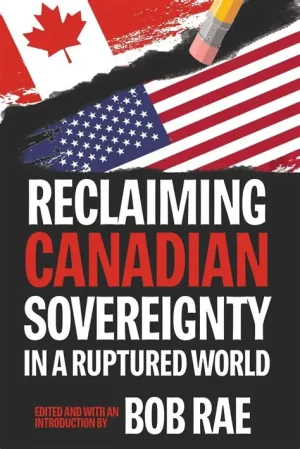 In an interview with Energi Media publisher Markham Hislop, the former Ontario premier and Canadian ambassador to the United Nations argued that Donald Trump’s policies threaten Canada’s manufacturing capacity and economic independence.
He said the response requires closer cooperation among governments and business, alongside continued efforts to stabilize the American relationship through diplomacy and engagement with American businesses.
Rae edited Reclaiming Canadian Sovereignty in a Ruptured World and wrote its introduction. He described the collection as an elaboration of Prime Minister Mark Carney’s assessment of the global rupture, while leaving room for contributors to criticize government choices.
Building The Capacity To Respond
Rae endorsed Carney’s broad diagnosis but emphasized the difficulty of implementation. Effective government, he said, depends on the people surrounding a leader and on coordination across federal, provincial, municipal and Indigenous institutions, business and civil society.
“It’s always a struggle in government to get people who really understand just how much the world has changed,” he said.
His advice to Carney is to broaden the team and empower capable people. Rae also said the prime minister would listen to criticism grounded in evidence, even if he questioned the data behind it.
On trade, Rae expects the United States to remain Canada’s most important partner over the next few years. But he argued that Canada must build relationships more widely and work with other middle powers to increase their collective influence.
He rejected the suggestion that Canadians fail to understand the American threat. He also cautioned against assuming Trump’s movement determines America’s future, pointing to divisions within the country and uncertainty about its political direction.
Provincial Barriers And National Unity
Rae said provincial protectionism obstructs the stronger domestic market Canada needs. He criticized Ontario Premier Doug Ford’s messaging on protecting Ontario while arguing that every premier must embrace freer movement of goods, people and credentials.
Discussing Alberta, Rae acknowledged the importance of energy resources to the province’s economy. But he argued that development must account for sustainability and obligations Canadians have to one another. He criticized Premier Danielle Smith’s approach to separatism and warned against treating separation as a political experiment.
Climate Remains A Present Issue
Rae supported electrification while insisting that climate policy remain central to Canada’s response. His experience at the United Nations, he said, reinforced the connections between climate change, conflict and displacement.
“We’re affected by climate change, not as a future issue, but as a present issue,” he said.
He pressed for practical support for electric vehicles, asking where the network needed to enable their use was being built. He also urged greater attention to sustainable development as Canada seeks broader markets for its energy.
Rae’s closing assessment was supportive of Carney’s direction without calling it perfect. For opposition parties, he argued that credible economic policies matter more than habitual negativity. For Canada, his priorities were stronger manufacturing, wider markets and sustained efforts to manage an exceptionally difficult relationship with its neighbour.
Endnote
- Read Bob Rae’s Reclaiming Canadian Sovereignty in a Ruptured World. Related Energi Media coverage: Jan Rosenow on Canada’s electrostate challenge and electrifying industry to improve competitiveness.