Carney Sends Whitehorse Power Centres Project to Major Projects Office
November 27, 2026 | Electrification, Canada, News
Prime Minister Mark Carney has referred the proposed Whitehorse Power Centres project to the federal Major Projects Office, moving the Yukon electricity plan into a new round of assessment but not yet giving it final approval.
 Energi Media’s interview with University of Victoria electricity modeller Madeleine McPherson examines why rising electricity demand is becoming a central challenge for Canada’s power systems. She said supply and demand must be developed together: “So we’re always trying to balance these two things.”
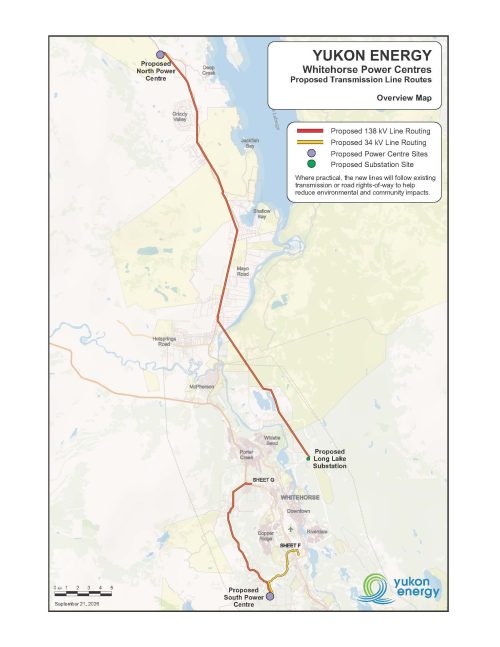
The Government of Yukon proposal calls for at least two thermal power generation centres in Whitehorse, along with a new electrical substation and transmission infrastructure. The first phase is designed to add 15 megawatts (MW) of capacity by 2028.
Later phases could expand the project to about 150 MW.
The federal government says the project could receive up to $73 million through the Build Communities Strong Fund. Its backgrounder says the Major Projects Office will help assess grid upgrades, residential and industrial electricity demand, investment opportunities for Yukon First Nations and private partners, and the appropriate fuel types and locations.
Fuel And Final Design Still To Be Determined
The proposed facilities are described as thermal plants, but the federal backgrounder says the fuel choice, locations and project scope still require further planning. The initial design and permitting work for two proposed sites has been submitted to the Yukon Environmental and Socio-economic Assessment Board.
Ottawa says the project would be located within the traditional territories of Kwanlin Dün First Nation and Ta’an Kwäch’än Council, with further assessment potentially involving other First Nations territories.
The referral is intended to help the Yukon address winter reliability risks. The federal government says homes and businesses connected to the Yukon grid, excluding mines, use about 80 per cent of the power Yukon Energy can produce on an average winter day.
On the broader economic stakes of getting electricity supply in place, McPherson said, “If that supply is not there when we need it, it’s a big hit to our economy. There’s a lot of economic growth, jobs that we’re leaving on the table.”
During cold snaps, demand can reach about 90 per cent of available capacity.
Yukon’s grid is isolated from the larger North American network, so it cannot draw power from neighbouring jurisdictions when local generation is constrained. The territory relies primarily on hydroelectricity, with thermal generation available for peak demand and backup. In earlier coverage, Energi Media examined the proposed Yukon-B.C. grid connection, a longer-term transmission option expected to take more than a decade to develop.
Indigenous Participation And Other Northern Projects
Ottawa says the power centres are intended to improve reliability, support economic growth and create opportunities for Yukon First Nations, including potential equity ownership. Energi Media’s coverage of energy transition funding in the territories has examined the infrastructure and financing challenges Indigenous-led clean energy projects face in the North.
The federal announcement also points to separate Mayo Hydro Facility and Atlin Hydro Expansion work. Ottawa says the two projects would preserve 15 MW of existing hydro capacity and could add 8 MW of new capacity, producing 31 gigawatt-hours of electricity each winter.
For a look at one small-scale northern energy system, watch Energi Media’s interview with researcher Henry Penn about a Yukon greenhouse powered mainly by solar and batteries, with diesel backup.
The Whitehorse Power Centres project now enters further assessment of system needs, costs, fuels and Indigenous participation. Those decisions will determine how the proposal fits with the Yukon’s hydro resources and longer-term plans to strengthen the territory’s electricity supply.