The Canadian energy conversation is stuck in the wrong century
April 13, 2026 | Markham on Energy
Find Energi Media journalism in video, audio, and essays
YouTube Channel: Video energy news
Substack Essays: Thoughtful Energy Journalism
Energi Talks Audio Podcast
Real story of this energy crisis is not supply disruption, but demand transformation
Turn on the news, and you hear about war in the Middle East, the Strait of Hormuz, and rising oil and gas prices. Governments talk about supply. Exporters talk about opportunity. But the real story is happening somewhere else in the demand system. And it is moving much faster than most policymakers understand.
The current geopolitical shock—like the Russia–Ukraine war before it—is not strengthening fossil fuels, but accelerating their displacement. Not because of climate policy, but because of basic economics that wouldn’t surprise most consumers.
I recently sat down with energy economist Dr. Chris Bataille to unpack what’s really happening in global energy markets. You can watch the full interview here.
But the system has changed. For decades, fossil fuels had no real competition. When prices rose, consumers absorbed the shock because there were no viable alternatives. Today, electricity—powered by solar, wind, and batteries—competes directly across transport, buildings, and parts of industry.
“One of the things that’s happening is probably the biggest boost to global decarbonization ever, more than any policy that’s ever occurred, that’s trying to make it easier for you to have,” said Bataille.
“The top 20 per cent of the crude oil supply curve is now wildly uncertain. And the top 20 per cent of the LNG supply curve is wildly uncertain. dIn previous crises there just weren’t other options. But the world has really changed in the last five years. Solar and batteries have really come on mainstream.”
That change is now driving behaviour. Countries are not waiting for markets to stabilize. They are redesigning their energy systems.

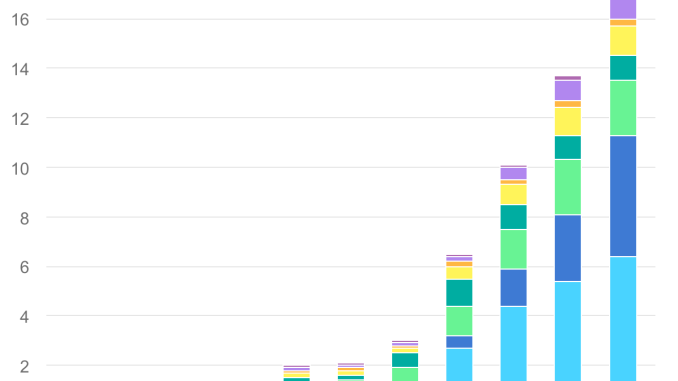
Global electricity total demand growth by sector and end-use, 2015-2030, International Energy Agency.
The system is electrifying faster than expected
The shift is not subtle. It is structural.
Electricity demand is rising rapidly across transport, buildings, and industry as economies electrify. What matters is not just growth, but composition. Electric vehicles, cooling demand, and industrial electrification are becoming the dominant drivers of energy demand growth. That means the system is shifting from fuels to electrons.
Bataille sees this clearly in global markets.
“The new standard is basically solar, and to a certain extent batteries. It’s not coal plants like everyone imagined. The dominant amount of energy that’s being used is from solar,” he said. “That’s really the story globally. And we’re not seeing it because we live in a country with copious amounts of gas.”
The Global South is forcing the transition
The real pressure is coming from emerging economies. After Europe outbid developing countries for LNG following Russia’s invasion of Ukraine, many were forced to rethink their dependence on imported fuels.
That lesson stuck.
“And here we are once again, driving up LNG, driving up oil,” I said during the interview. “The lesson is not lost on the Global South. This is expensive. They have to use US dollars to pay for it. And there are alternatives.”
Bataille agreed—and pushed it further.
“The amount—like as you say—they have to get U.S. dollars to buy it. It becomes a really big macroeconomic problem really quickly. A lot of places are curtailing industrial production because they can’t get LNG or crude oil. They are going to be looking very carefully at alternatives in all sectors. And this is going to take a big structural chunk out of the global fossil fuel market.”
Those alternatives are increasingly clear. Solar is now the dominant source of new power capacity globally. It is cheap, scalable, and deployable without fuel imports. That makes it ideal for countries trying to reduce exposure to volatile global markets.

Total renewable capacity additions by technology, 2019-2024. International Energy Agency.
China is capturing the shift
China has spent two decades preparing for this moment. It built manufacturing capacity across solar, batteries, EVs, and grid infrastructure. Now it is exporting that system into emerging markets.
“And what’s really interesting is everyone keeps looking at what China did five or ten years ago. They’re not looking at what China’s doing right now,” Bataille said. “They’re taking all that industrial policy and turning it on the industrial sector. The next thing that’s going to go is industry and chemical products.”
That expansion is already reshaping global energy flows.
“And that is cascading throughout the world with their overcapacity,” he added. “They’ve moved really quickly to give themselves more options for their electricity system, their chemical products system, and their transport sector.”
The result is a feedback loop:
- Energy shocks raise fossil fuel prices
- Countries seek alternatives
- China supplies those alternatives
- Fossil demand weakens structurally
Oil demand is more fragile than it appears
This has direct implications for oil markets. Roughly half of global oil demand comes from road transport—the sector most exposed to electrification. Electric vehicles are scaling rapidly, particularly in China and increasingly in developing markets.
Bataille does not hedge on the implications: “The crude oil demand for transport is a dead man walking at this point in time. It’s about 50 per cent of global oil demand. That’s the sector that’s going to go.”
Even if that timeline proves aggressive, the direction is clear. And once demand begins to erode, it weakens at the margins first—the highest-cost, least secure supply.
That is exactly the portion of the market now under pressure.
Global electric car sales, 2014-2024. International Energy Agency.
Canada is still telling itself the old story
Canada continues to view the world through a petroleum lens.
“We still see global energy issues through the petroleum lens,” I said during the interview. “From the federal government on down.”
That framing leads to a dangerous assumption: that high prices are a windfall. In reality, they are a catalyst.
“And what they’re not seeing is the shock that that’s still delivering to demand globally,” Bataille said. “This is like a quasi standstill for a lot of places. They’re going to move away from it.”
The risk for Canada is not cyclical. It is structural.
If global demand begins to weaken faster than expected, long-lived infrastructure bets—pipelines, LNG terminals—become harder to justify.
The system is already changing
The global energy system is not waiting. It is being reshaped by price shocks, technological substitution, and industrial strategy. The question is not whether this transition will occur.
It is whether countries like Canada recognize it in time. Because the real story of this energy crisis is not supply disruption. It is demand transformation.
And that story is already underway.
To watch more energy expert interviews on this topic, you can find them on the following playlists on the Energi Media YouTube channel:
Electrotech Revolution Explained
Electric Vehicles
Energy Transition
To learn more about energy transition theory, take our free one-hour training course: The Energy Transition Explained.