The link between climate disasters and authoritarian regimes
October 29, 2024 | Opinion
This article was published by Grist on Oct. 29, 2024.
Hello, and welcome back to State of Emergency. I’m L.V. Anderson (or Laura to my colleagues), a senior editor at Grist, and I’m taking over the newsletter today to give you a wide-angle look at how climate change is affecting democracy not just in the U.S., but around the world.
One of the biggest stories of this year’s U.S. presidential election is former President Donald Trump’s authoritarian rhetoric. Over the past few years, Trump has described his political opponents as “vermin” and made more than 100 threats to prosecute, imprison, or otherwise punish them. He’s said he would be a dictator on “day one” of his second term. He’s called for “the termination of all rules, regulations, and articles, even those found in the Constitution.” He’s demonized immigrants and promised mass deportation. That’s just a small sample of Trump’s numerous pledges to pursue retaliation and personal grievances without regard for democratic norms.
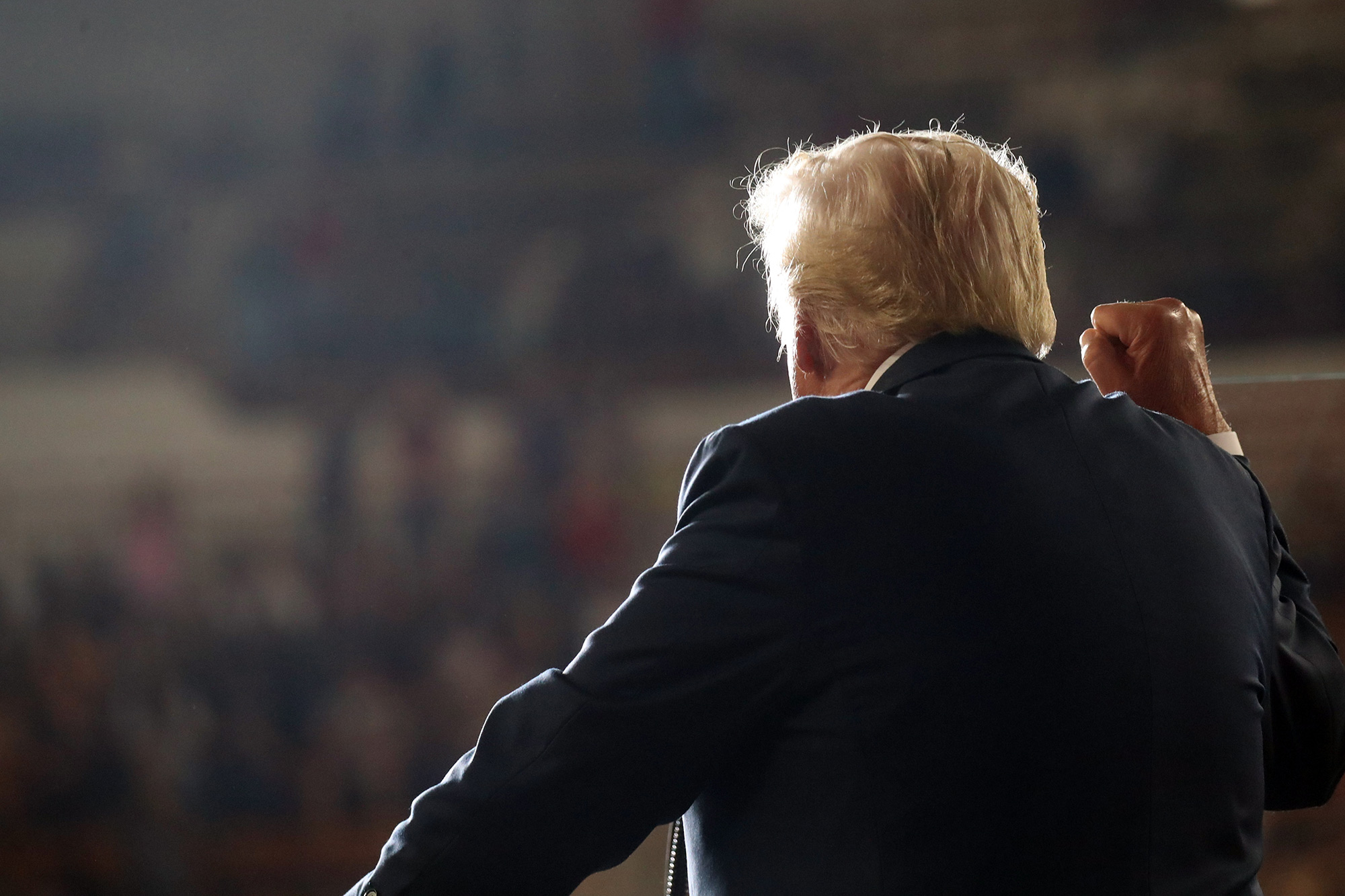
Former President Donald Trump speaks at a campaign appearance on July 31 in Harrisburg, Pennsylvania. Spencer Platt / Getty Images
In some ways, Trump’s persona and bombast are uniquely American. But he is hardly the only politician around the world to incite violence, scapegoat vulnerable communities, and seek unchecked power in recent years. Hungarian Prime Minister Viktor Orbán, Turkish President Recep Tayyip Erdoğan, and Israeli Prime Minister Benjamin Netanyahu are just a few of Trump’s international counterparts. The global rise of these authoritarian populists, also known as strongmen, has coincided with rapidly accelerating climate change and unprecedented hurricanes, droughts, heat waves, and wildfires. Could climate change actually be contributing to the rise of authoritarianism? That’s the question I address in my latest piece for Grist.
Economists and social scientists have found evidence that global warming can push individuals, and nations, in an authoritarian direction.
There’s never any single factor behind a political trend, but economists and social scientists have found evidence that global warming — which increases people’s physical, social, and economic vulnerability — can push individuals, and nations, in an authoritarian direction. “Climate change is often discussed as a global security risk,” said Immo Fritsche, a social psychology professor at Leipzig University in Germany. As climate change reduces water access and habitable land around the world, the theory goes, intergroup conflict increases. But Fritsche has co-authored a series of studies that demonstrate that reminding people of the dangers of climate change can cause them to more strongly conform to collective norms — and to denigrate outsiders.
His findings point to a different possible explanation for how climate change could contribute to political destabilization. “The idea was to think about another potentially catalyzing process that might also be relevant for such effects, which is a bit more psychological and a bit more subtle.”
You can read about Fritsche’s research, along with other studies that have looked at the ties between climate change and authoritarianism, in my full article here. I hope you find this body of scholarship as interesting as I do.
A referendum on Puerto Rico
Puerto Rico is still struggling to recover from historic damage caused by Hurricane Maria, which took down the U.S. territory’s power grid in 2017 and created an unprecedented humanitarian crisis there. Trump, who took office that year, withheld about $20 billion in disaster aid and famously tossed rolls of paper towels into a crowd as citizens of the island suffered nearby with limited federal aid.
Now, a week before the election, a Trump rally in New York City has thrust the former president’s response to that storm back into the spotlight. “I don’t know if you guys know this, but there’s literally a floating island of garbage in the middle of the ocean right now. I think it’s called Puerto Rico,” stand-up comedian Tony Hinchcliffe said in the opening segment of a Trump rally at Madison Square Garden on Sunday. The Trump campaign quickly denounced the racist remark — “This joke does not reflect the views of President Trump or the campaign,” a senior advisor said — but the Harris campaign, which had put out a Puerto Rico policy plan that same day, had already pounced.
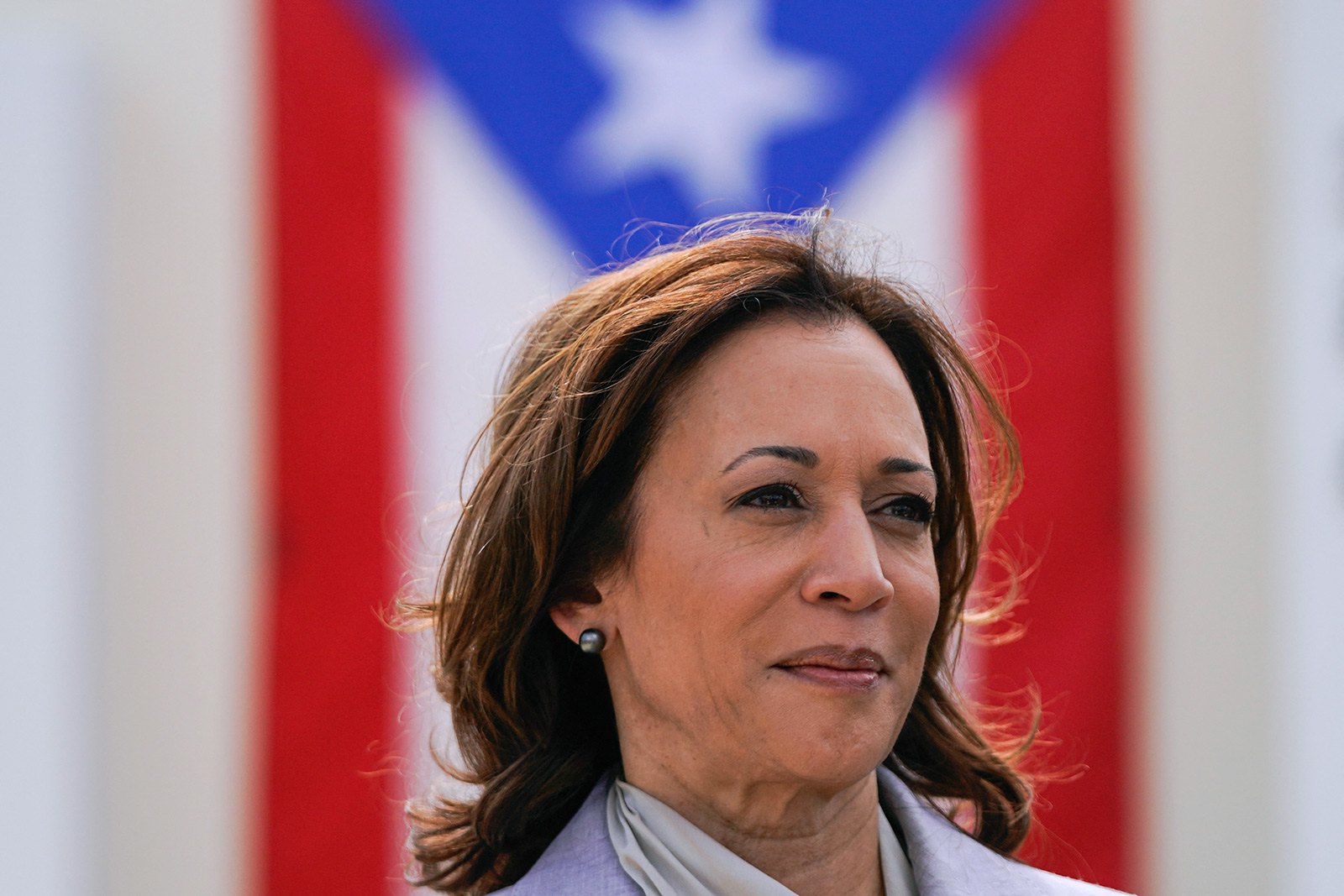
Vice President Kamala Harris attends an event in Puerto Rico to highlight the administration’s support of the U.S. territory’s recovery and renewal. Drew Angerer / AFP via Getty Images
“Today I released my plan to help build a brighter future for Puerto Rico and the Puerto Rican people as president,” Vice President Harris posted on X Sunday night. “Meanwhile, at Donald Trump’s rally, they’re calling Puerto Rico “a floating island of garbage.” Harris’ proposal, called Building an Opportunity Economy for Puerto Rico, focuses on making the island’s grid greener and more resilient by tapping into federal disaster funding and clean energy tax credits in the Inflation Reduction Act.
Latin pop stars Bad Bunny, Jennifer Lopez, and Ricky Martin, who have tens of millions of followers between them, shared Harris’ Puerto Rico plan hours after the racist, misogynistic, and vitriolic comments made by the former president and other speakers at the rally, including Hinchcliffe, started making headlines. Puerto Ricans can participate in primary elections, but it does not have votes in the Electoral College, so residents have no say over who becomes president. There are, however, nearly 6 million Puerto Ricans living in the continental U.S. who can vote — and 8 per cent of them live in Pennsylvania, the swing state where Harris unveiled her Puerto Rico policy plan on Sunday.
— Zoya Teirstein