
Energi Media journalism in video, audio, and essays
YouTube Channel: Video energy news
Substack Essays: Thoughtful Energy Journalism
Energi Talks Audio Podcast
Website: Energy news
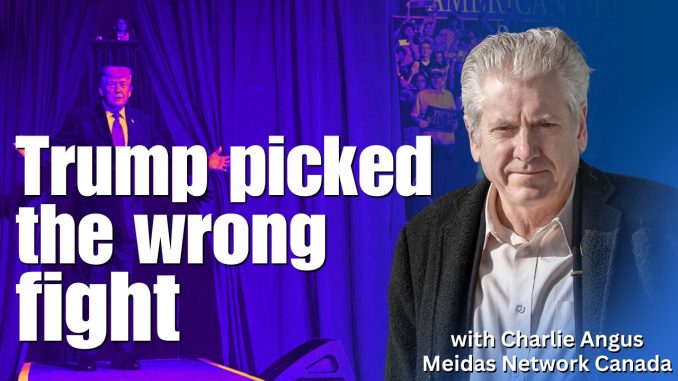
Former NDP MP Charlie Angus says the Canada–U.S. tariff dispute has moved beyond ordinary trade negotiations and become a struggle over Canadian sovereignty.
In an interview with Energi Media, Angus said the last-minute U.S. demands that led Prime Minister Mark Carney and the Canadian negotiating team to walk away from talks were deliberately provocative and showed that the Trump administration expected Canada to accept a subordinate relationship.
“There’s no going back to the table,” Angus said, arguing that Canada cannot resume negotiations while Washington continues to put Canadian sovereignty at issue. Carney has said talks will not restart until the Americans “change their attitude.”
Angus also praised the federal government’s retaliatory tariff strategy. Rather than immediately targeting major Canadian exports such as oil, potash or electricity, Ottawa has focused on narrower U.S. products and industrial components.
He described the measures as “strategic body blows” designed to create pressure in politically important U.S. states while preserving Canada’s larger economic weapons if the dispute escalates.
The strategy, Angus said, could become increasingly important as the United States approaches the midterm elections and Republican politicians face pressure from affected factories, workers and businesses.
The interview also examined the broader economic strategy behind Trump’s confrontation with Canada. Energi Media publisher Markham Hislop described the administration’s approach as neo-mercantilist: an attempt to concentrate manufacturing, value-added production and industrial power in the United States while treating countries such as Canada as suppliers of energy, minerals and other raw materials.
Angus said the approach undermines the very North American economic bloc the United States would need to compete with China. Washington already had secure access to Canadian and Mexican resources, he argued, but Trump’s threats and tariffs are turning allies into opponents.
The political consequences are also spreading inside Canada. Angus pointed to former Alberta premier Jason Kenney’s return to the national-unity debate and his opposition to separatism as evidence that the political ground may be shifting against Alberta Premier Danielle Smith and pro-separation forces.
Angus predicted the confrontation will be long and difficult, but said Trump may have badly miscalculated Canada’s willingness to resist. Rather than breaking Canadian unity, he argued, U.S. pressure is bringing parts of the country together and forcing a broader debate about dependence on the American market.
“Buckle up,” Angus said. Canada, he argued, has not yet used its strongest economic leverage—and the dispute may only be beginning.
Be the first to comment