Planned retirements of U.S. coal-fired electric-generating capacity to increase in 2025
February 25, 2025 | News
This article was published by the US Energy Information Administration on Feb. 25, 2025.
By the Office of Energy Statistics staff
Electricity generators plan to retire 12.3 gigawatts (GW) of capacity in 2025, a 65 per cent increase in retirements compared with 2024. Last year, 7.5 GW was retired from the U.S. power grid, the least generation retired since 2011, according to data reported to us in our latest inventory of electric generators. Coal generating capacity accounts for the largest share of planned capacity retirements (66 per cent), followed by natural gas (21 per cent).

Coal. Electric generators report that they plan to retire 8.1 GW of coal-fired capacity in 2025, or 4.7 per cent of the total U.S. coal fleet that was in operation at the end of 2024. Coal retirements decreased to 4.0 GW last year, less than the 9.8 GW of coal capacity retired in each of the last 10 years.
The largest U.S. coal plant that generators plan to retire this year is the 1,800-megawatt (MW) Intermountain Power Project in Utah, where an 840-MW natural gas combined-cycle power block is expected to come online in July. J H Campbell (1,331 MW) in Michigan and Brandon Shores (1,273 MW) in Maryland are two other large coal plants expected to retire this year.
Natural gas. This year, generators plan to retire 2.6 GW of U.S. natural gas capacity, representing 0.5 per cent of the natural gas fleet in operation at the end of 2024. Almost all of the expected retirements are simple-cycle natural gas turbine power plants, which burn natural gas in a single turbine to produce electricity and are less efficient compared with combined-cycle natural gas plants.
More than 62 per cent of the natural gas retirements will come from V H Braunig Units 1, 2, and 3 (859 MW) in Texas and Eddystone Units 3 and 4 (760 MW) in Pennsylvania. Both plants are retiring old steam units installed between 1966 and 1974. Another 29 per cent of the natural gas retirements will come from 16 simple-cycle combustion turbines totalling 754 MW at the Tennessee Valley Authority’s (TVA) Johnsonville station in Tennessee. These units, installed in 1975, will be replaced with 10 new, modern aeroderivative gas turbines, which will add 500 MW of natural gas capacity back to the Johnsonville station.
Petroleum. Petroleum-fired power plants make up around 2.3 per cent of generating capacity in the United States. This year, 1.6 GW of U.S. petroleum-fired capacity is scheduled to retire. More than half of the retiring capacity comes from the Herbert A Wagner power plant in Maryland, where Talen Energy plans to retire three of its oil-fired units totalling 828 MW. The next-largest retirement comes from the TVA’s Allen power plant in Tennessee, where TVA plans to shut down its 20-unit combustion turbine site totaling 427 MW.
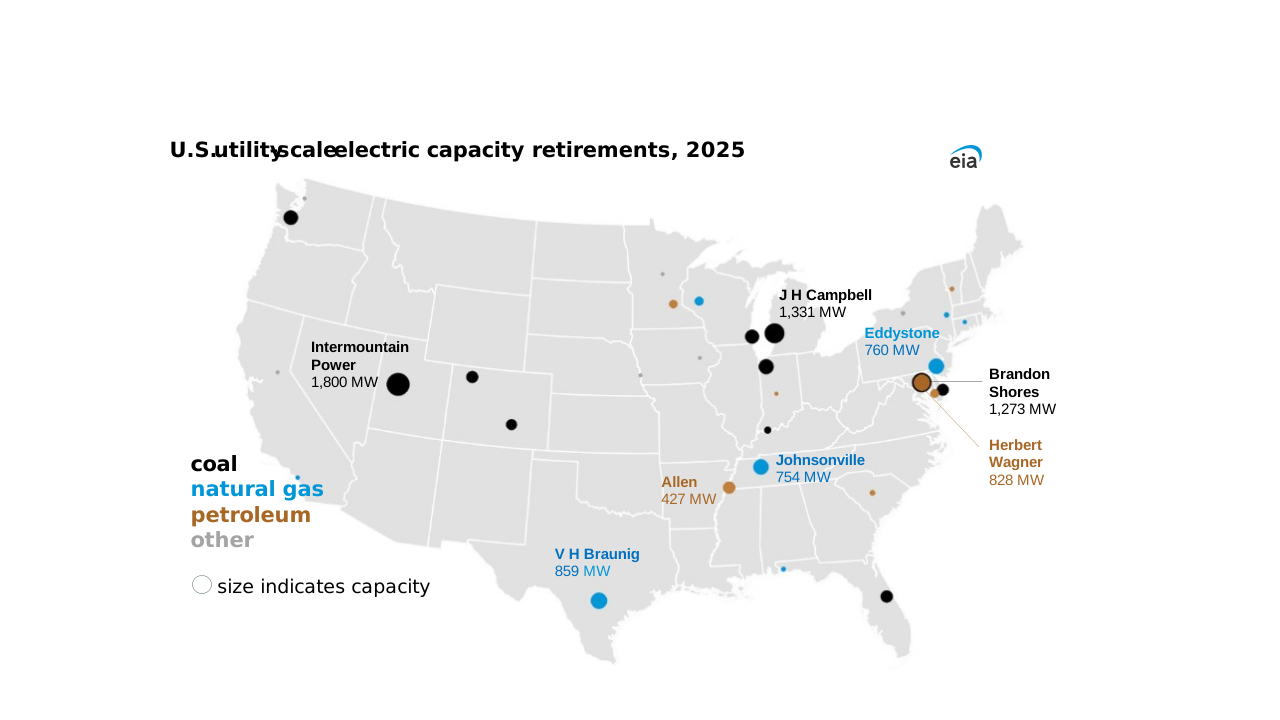
Note: MW=megawatts