U.S. hydropower generation expected to rise in 2025 following last year’s relative low
May 20, 2025 | News
This article was published by the US Energy Information Administration on May 19, 2025.
By Lindsay Aramayo
We expect U.S. hydropower generation will increase by 7.5 per cent in 2025 but will remain 2.4 per cent below the 10-year average in our May Short-Term Energy Outlook (STEO). Hydropower generation in 2024 fell to 241 billion kilowatthours (BkWh), the lowest since at least 2010; in 2025, we expect generation will be 259.1 BkWh. This amount of generation would represent 6 per cent of the electricity generation in the country.
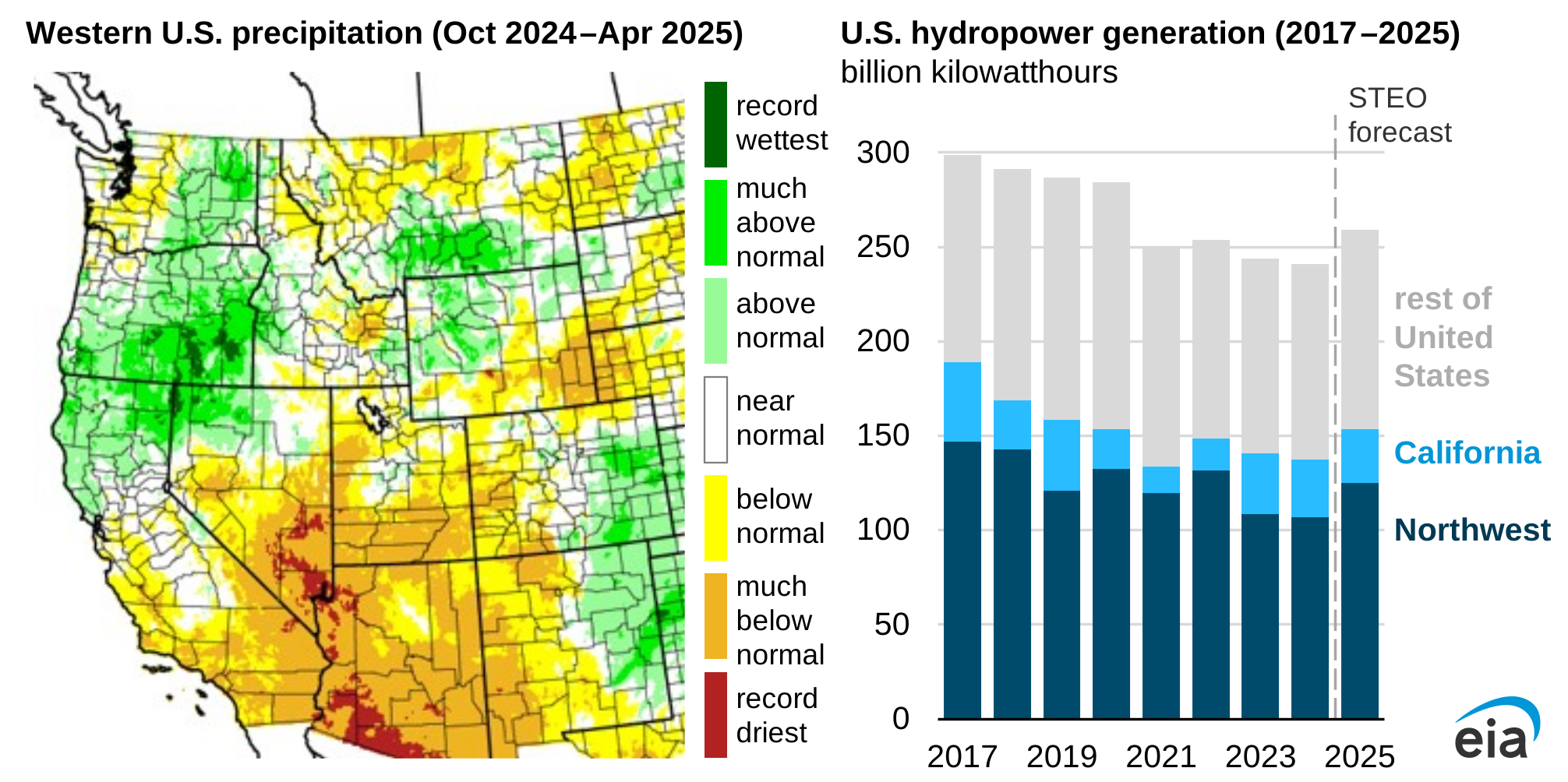
About half of the hydropower generating capacity in the country is in the western states of Washington, Oregon, and California, so we closely monitor precipitation patterns in this region to inform our hydropower outlook.
Precipitation conditions have been mixed across the western United States since October. According to the WestWide Drought Tracker, more precipitation than normal has fallen in northern California, Oregon, and the eastern half of Washington state. Some areas in southeastern Oregon received record precipitation between October 2024 and April 2025. In contrast, precipitation was below normal in parts of Washington, Montana, Idaho, and Southern California.
Accumulation from winter precipitation tends to peak by April 1. The snowpack accumulation at higher elevations serves as a natural reservoir that melts gradually as temperatures rise in the late spring and early summer, leading to increased waterflow through dams.
Northwest and Rockies
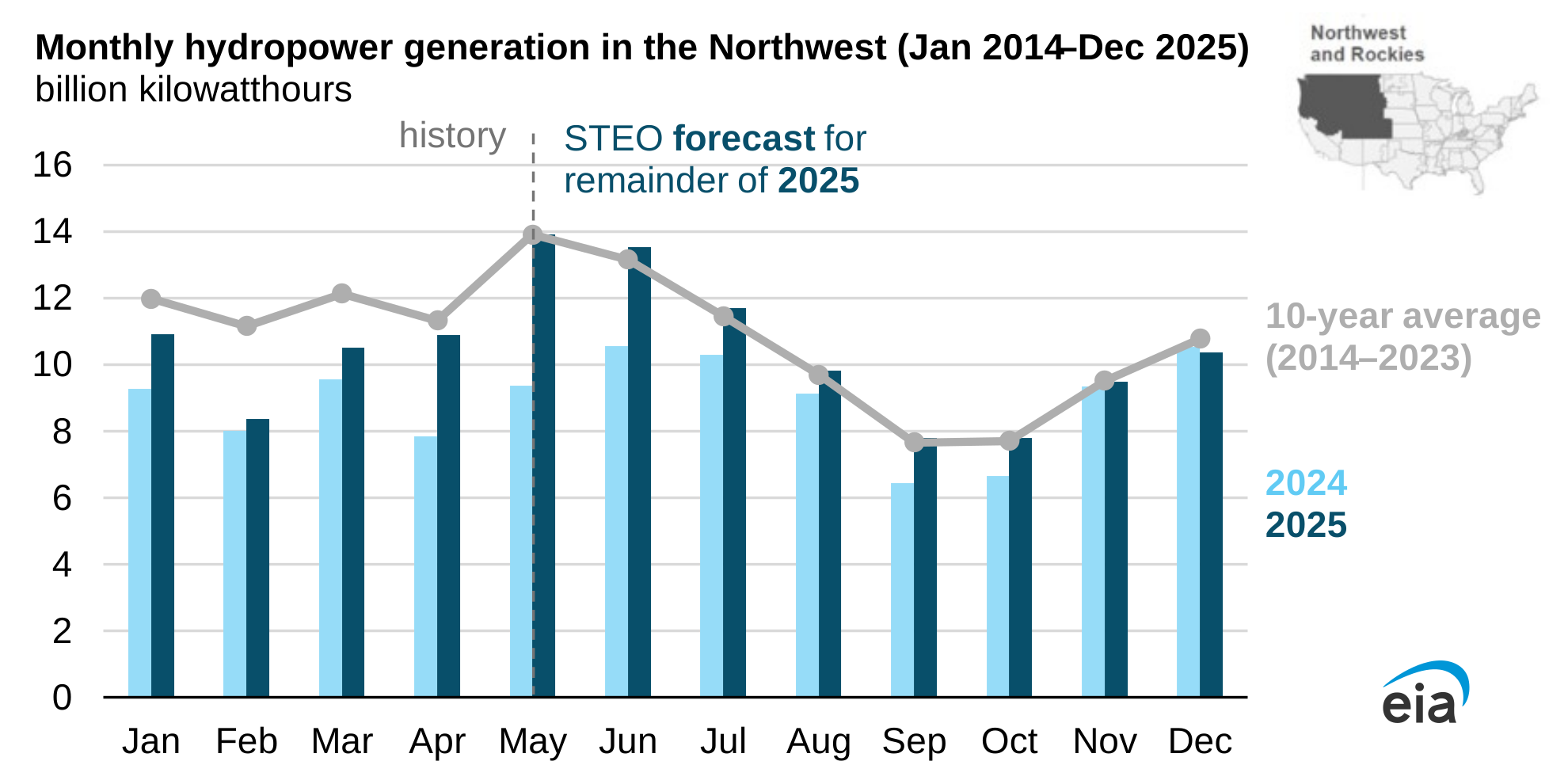
We expect hydropower generation in the Northwest and Rockies region to be 125.1 BkWh, which is a 17 per cent increase compared with 2024 and 4 per cent less than the 10-year average. Our hydropower forecast is informed by the water supply outlook from the National Oceanic and Atmospheric Administration’s Northwest River Forecast Center (NWRFC).
On May 1, NWRFC released its latest April–September water supply forecast for the Pacific Northwest, part of the larger Northwest and Rockies region as modelled in the STEO. The NWRFC forecasts the region will have a below-normal water supply compared with the past 30 years in the northern portion of the basin, which includes the Upper Columbia River Basin, and above- to near-normal water supply in the southern portion, which includes the Snake River Basin. Water supply conditions at The Dalles Dam, located near the mouth of the Columbia River on the border between Washington and Oregon, reflect those of the upstream Columbia River system. The forecast at The Dalles Dam as of May 1 was 85 per cent of normal for the same period.
California
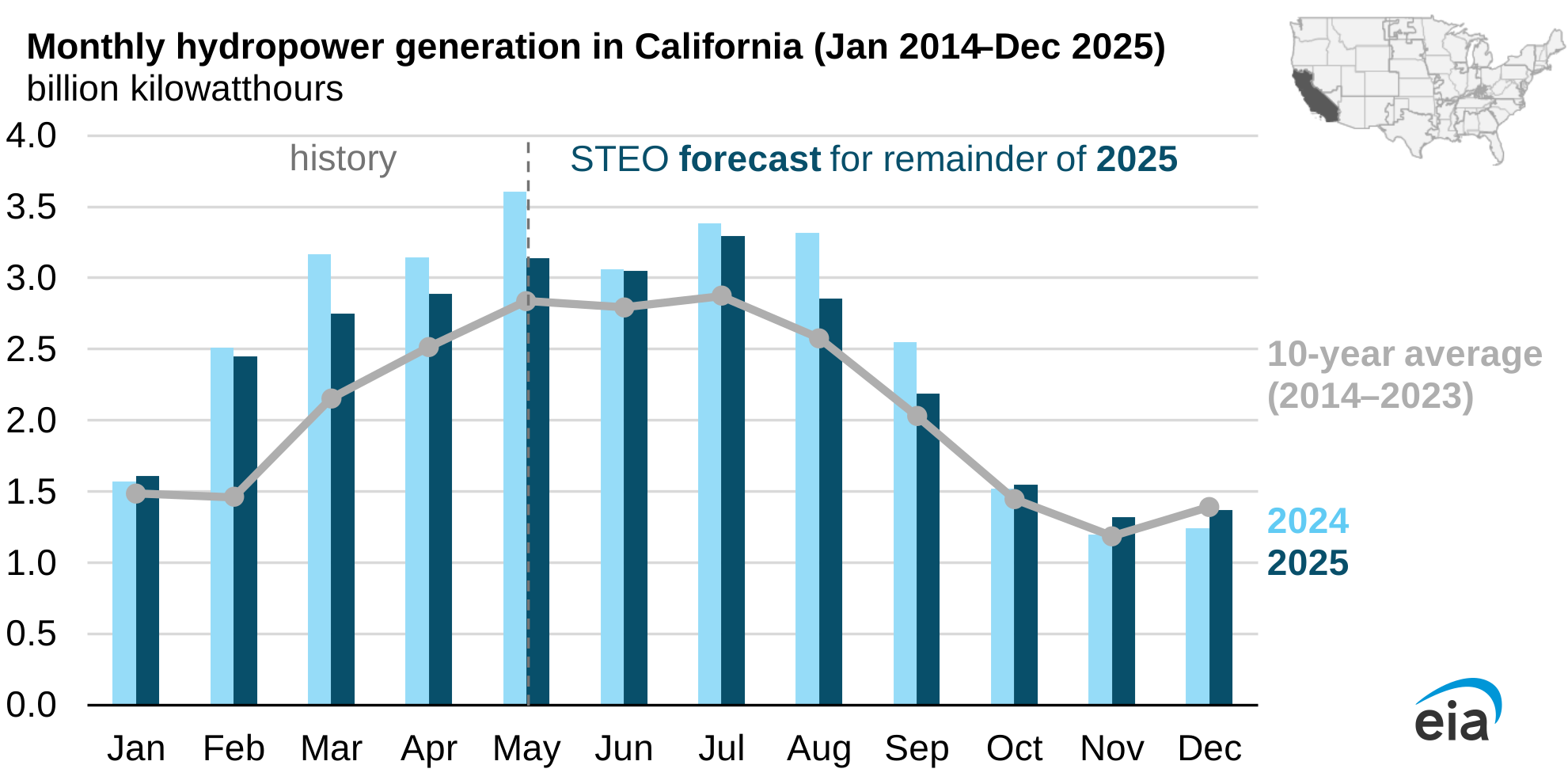
We forecast hydropower generation in California to be 28.5 BkWh in our May STEO, which is 6 per cent less than last year’s generation. This total would be 15 per cent more than the 10-year average.
As of April 1, reservoir levels in most major reservoirs in California were above the historical average for this time of year. The two largest reservoirs in the state, Shasta and Oroville, were at 113 per cent and 121 per cent of the historical average, respectively. According to the California Department of Water Resources, snowpack conditions as of April 1 were at 118 per cent of normal for the Northern Sierra Nevada, 92 per cent for Central Sierra, and 83 per cent in Southern Sierra Nevada regions. Warmer-than-normal temperatures in April led to some early snowmelt across the state. As of the beginning of May, snowpack conditions were at 81 per cent of normal for the Northern Sierra Nevada, 73 per cent for Central Sierra, and 53 per cent for the Southern Sierra portion.